Battery storage
Keep the sunshine for later.
The basics
What a battery actually does.
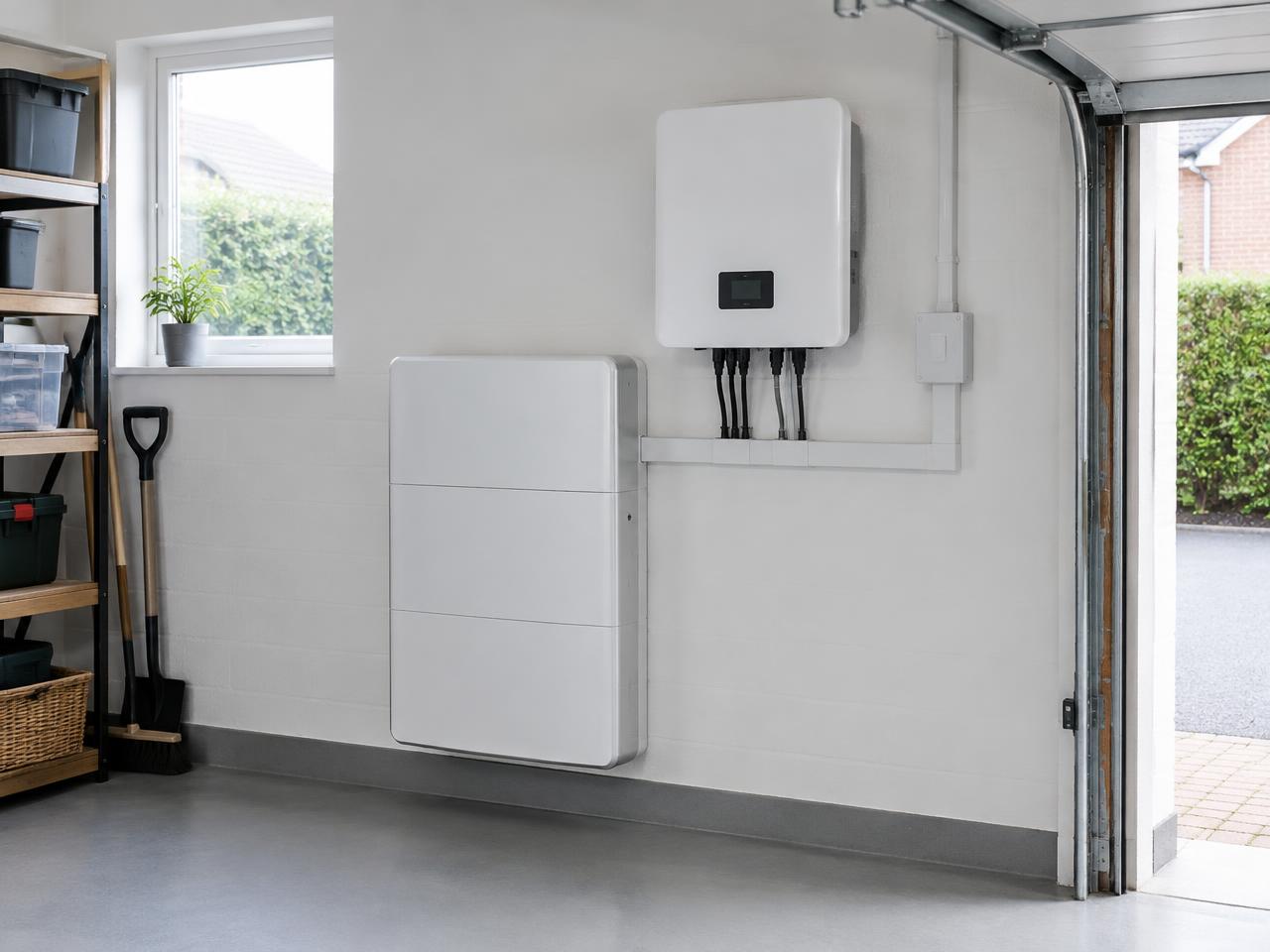
Solar panels generate most in the middle of the day, when many homes are using the least. Without a battery, that surplus goes to the grid.
A battery stores it instead, then powers your home through the evening — cooking, telly, lights — before you need to draw from the grid.
Sizing
Sizing, in plain English.
Battery size is measured in kilowatt-hours (kWh) — how much energy it can hold. The right size depends on how much you use between sunset and bedtime, and how much your panels can spare.
Bigger isn't always better. We look at your usage and design something that will regularly fill and empty, rather than sit half-used.
Retrofit
Adding a battery to existing solar.
Already have panels? We check your current inverter and recommend the right approach — AC-coupled (a separate battery inverter, simplest for most older systems) or DC-coupled (via a hybrid inverter, often swapping the old one).
Tariffs
Cheap overnight tariffs.
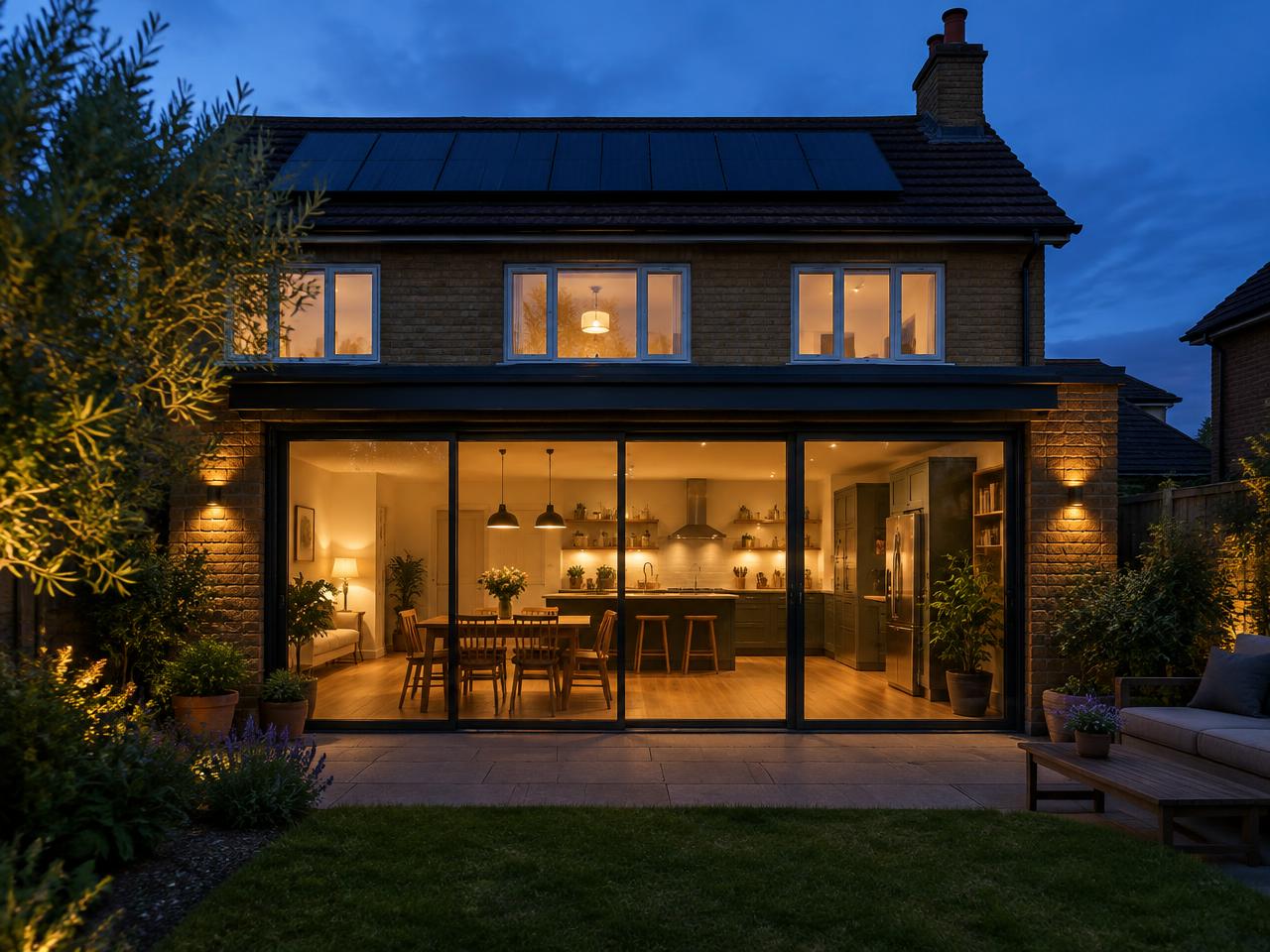
Some energy tariffs have cheaper rates overnight. A battery can charge off-peak and power your home during pricier hours — useful in winter, when the sun does less.
Power cuts
Backup power during power cuts.
Most systems switch off during a power cut for safety. Backup is available on some systems with the right equipment and wiring — ask us and we'll explain what's possible for your home.
VAT
0% VAT applies to batteries too.
Including batteries fitted on their own, supply-and-install in homes in Great Britain is zero-rated until 31 March 2027. From 1 April 2027 it rises to 5%.